
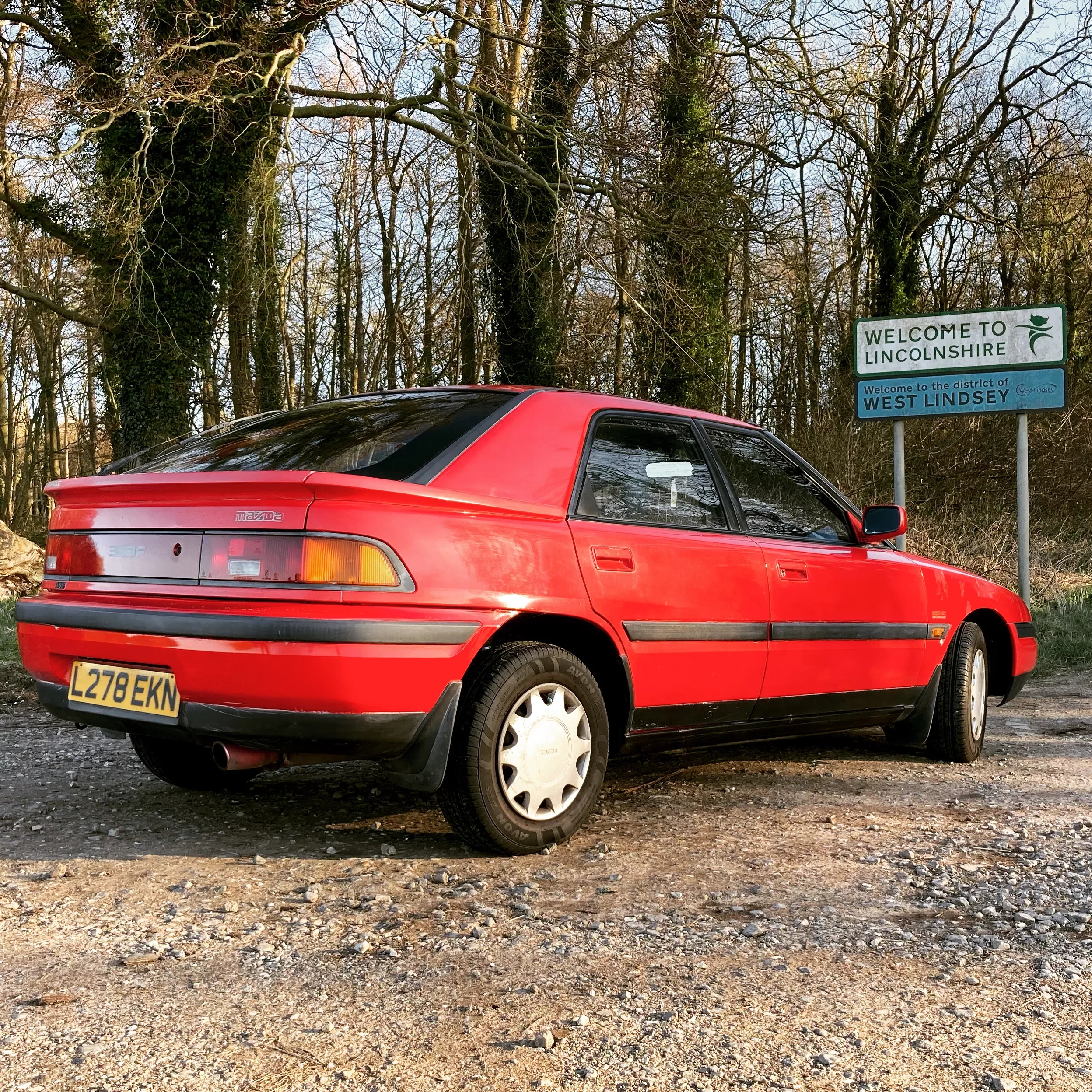
For years, the Mazda 323F sat in an awkward position in the classic car world. but is the Mazda 323F becoming a future classic?
Too old to be considered modern, but not old enough to be seen as a classic. Too practical to be a sports car, yet too distinctive to blend into the background. While cars like the Mazda MX-5, Toyota Celica and Honda CR-X built dedicated followings, the 323F quietly carried on doing what it had always done best: being dependable, practical and a little bit different.
But something has changed.
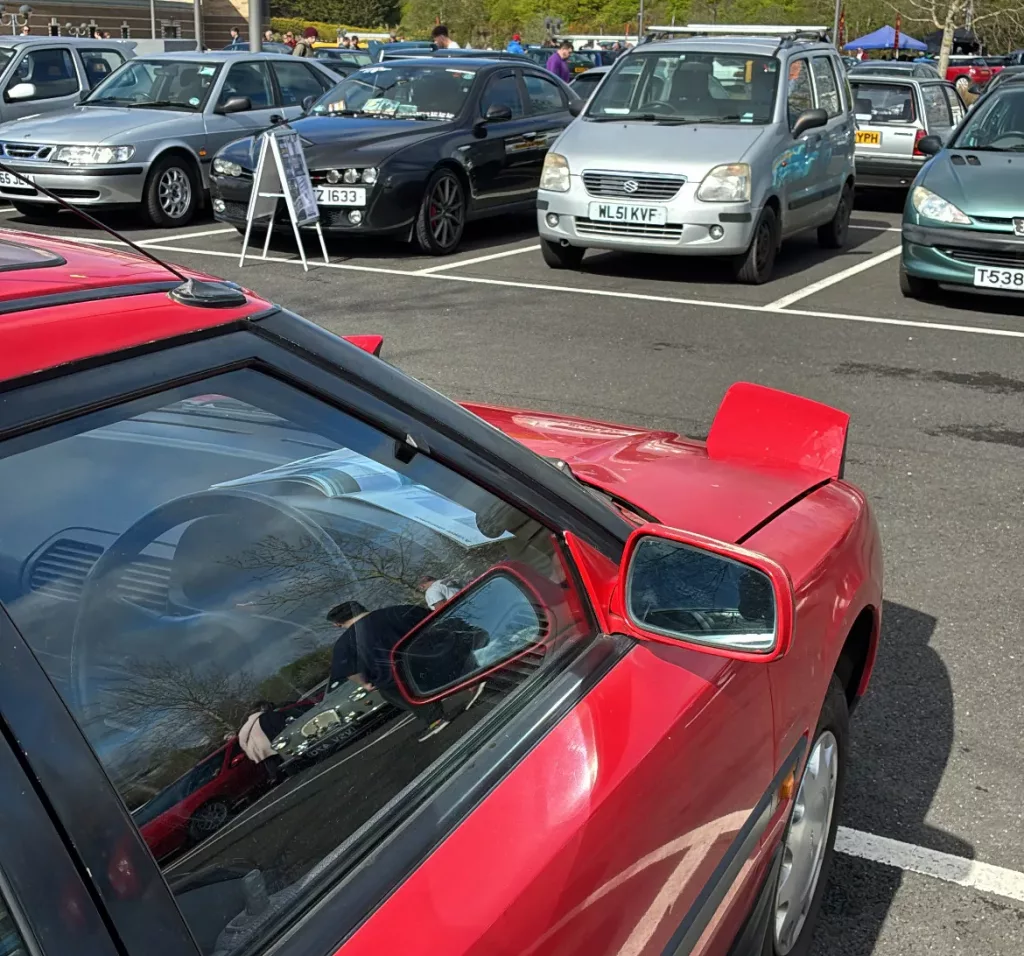
After taking my own 1994 Mazda 323F BG Fastback, affectionately known as Poppy, to events including the Festival of the Unexceptional and Rustival, I’ve become increasingly convinced that the Mazda 323F is beginning the transition from old used car to genuine future classic.
And the evidence is everywhere.
People Notice the Mazda 323F More Than Ever
One of the most surprising things about owning a Mazda 323F today is the attention it receives.
Not because it’s exotic.
Not because it’s fast.
Not because it’s particularly valuable.
But because people simply don’t see them anymore.
At the Festival of the Unexceptional, surrounded by hundreds of ordinary family cars from the 1980s, 1990s and early 2000s, Poppy attracted a steady stream of interest throughout the day. People stopped to tell stories about cars they used to own, cars their parents drove, or cars they learned to drive in.
The same thing happened at Rustival.
Owners of far more expensive machinery would wander over and say exactly the same thing:
“I haven’t seen one of these in years.”
That sentence alone tells you everything you need to know about the Mazda 323F’s future.
People don’t miss cars that were forgettable.
The Survivors Are Becoming Rare
Back in the 1990s and early 2000s, the Mazda 323F was everywhere.
The BG Fastback in particular offered something different from rivals such as the Ford Escort, Vauxhall Astra and Rover 200. It combined Mazda reliability with striking styling, including those famous pop-up headlights.
Unfortunately, many examples simply disappeared.
Rust took its toll. Low values made repairs uneconomical. Many were scrapped over issues that would now be considered minor.
As a result, surviving cars are becoming increasingly scarce.
This rarity is one of the key ingredients that often transforms an ordinary vehicle into a future classic.
It Represents a Different Era of Mazda
Modern Mazdas are excellent cars.
But they are fundamentally different from the company that produced the 323F. The 323F came from a period when Mazda was willing to take risks.
Pop-up headlights.
Distinctive fastback styling.
A family hatchback that looked like nothing else on the road.
Today, manufacturers rarely take those kinds of risks. Increasing regulations, safety requirements and market pressures have pushed car design towards similarity. The 323F stands as a reminder of a time when even an ordinary family car could have genuine character.
The Driving Experience Still Holds Up
Future classics aren’t always the fastest cars. Sometimes they’re simply enjoyable. The Mazda 323F is light by modern standards.
Visibility is excellent. Controls are simple and intuitive. There’s no touchscreen to distract you and no endless menus to navigate. Everything feels refreshingly mechanical.
While modern cars are objectively better in many areas, the 323F offers something increasingly rare: simplicity.
That simplicity is becoming more valuable as modern vehicles become more complex.
Parts Availability Is Better Than Many People Think
One factor that often determines whether a car becomes a future classic is parts support.
Fortunately, the Mazda 323F community remains surprisingly resourceful.
Specialist suppliers, enthusiast groups and dedicated owners continue to keep cars on the road. While some trim pieces and body panels are becoming difficult to source, mechanical parts remain available for many models. Plus, if you can’t find a part, we can help.
The growth of enthusiast-led sites dedicated to preserving and supplying parts for the 323F demonstrates that there is still demand from owners determined to keep these cars alive. Not to mention, the (admittedly ancient) Club 323F website is an absolute godsend for seeing what goes wrong and how to fix it from owners.
A classic car cannot survive without enthusiasts, and the 323F still has them.
Values Are Beginning to Stabilise
Nobody should buy a Mazda 323F as an investment. However, values appear to have reached a turning point.
For years, good cars were worth little more than scrap value. Today, tidy, original examples are attracting increasing interest, with good GT/GTI models heading for £10k in the UK, with the more common GLX and GLXi models going for £4000 for a nice one – just don’t pay a premium for an ABS-fitted model.
Enthusiasts are beginning to recognise that there simply aren’t many left. As supply falls and interest grows, values tend to follow.
The process is rarely dramatic, but it is often the first sign that a vehicle is becoming appreciated.
So, Is the Mazda 323F a Future Classic?
In my view, absolutely.
Not because it’s expensive. Not because it’s rare in the same way as a Ferrari or Porsche. But because it represents a disappearing piece of everyday motoring history.
The Mazda 323F tells the story of a time when family cars could be distinctive, manufacturers could be bold, and reliability didn’t come at the expense of character.
Most importantly, people are beginning to notice. Every conversation at a car show. Every person who points and smiles. Every owner who says, “I used to have one of those.”
Those are the moments that tell you a car has become something more than just transport.
The Mazda 323F may have spent decades overlooked, but its future as a classic is looking brighter than ever.
And of course, if you need parts, have a shop around on our website.


 using WordPress and
Comments are closed